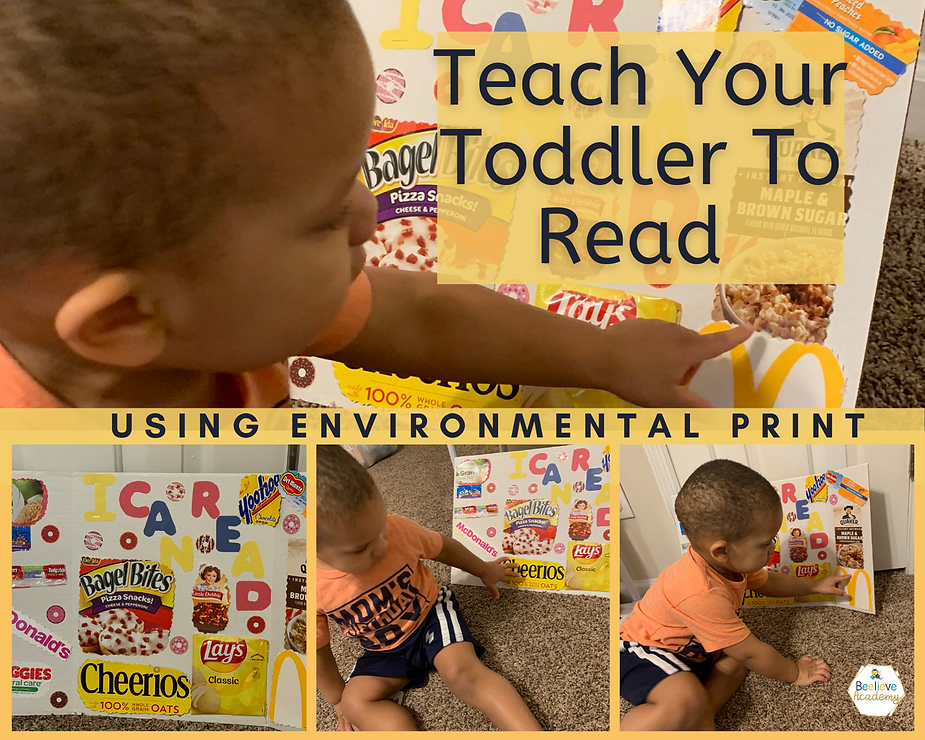
Environmental print is all around us. Environmental print includes traffic signs, restaurant logos, grocery store labels, Restaurant billboards and more! Believe it or not your child is learning to read simply by become aware of the print around them. Mcdonalds is a treat that we have once or twice a month. Our toddler now points to the Mcdonald's sign and say "eat, eat" as we pass it. Our oldest son now recognizes the word Youtube and can find it on the remote without my help. Environmental print is one of the first introductions to reading your child will have. Help your child feel confident by "reading" labels he/she is already familiar with. Believe it or not but your child is already a reader in the making!!!
Children learn when they create meaningful connections to abstract subjects around us. Symbols, letters, and pictures are being read every time your child encounters them. Words and photos are meaningless until we attribute some kind of meaning to them. I like to use environmental print in and out of the classroom to build confidence in the knowledge our children already know. Our children can already read some of the labels they encounter every day. An older preschooler can cut out the pictures and help paste them onto the board along with you. Let this activity become a bonding and interactive lesson.
Here are some ways you can use Environmental Print Boards
Environmental Print Billboards (Growing Book by Book). This is an awesome idea to teach print awareness by creating these cute mini billboards.
Environmental Print Anchor Chart/ Predictable Sentences (Pre-k Pages) Write a sentence such as "----- likes to eat _______. Using this same phrase over and over makes it easy for young children to memorize. Put the logo next to the word for reinforcement.
Play I Spy with letters (Beelieve Academy) . Call out a letter and encourage your child to find it. Older children can put a sticker on the chosen letter. Add a little math by inviting your child to count how many times a specific letter appears on the board.
Using Food Boxes (Trashable to Teachable) These are more ideas you can use with food boxes.
I Spy Colors (Beelieve Academy) Toddlers can identify colors they see on the board. Discuss the variations of colors- including color families for children who are more advanced with color recognition.
Count words you find on the board (Beelieve Academy) Children do not naturally know that letters make up words. More over, they also need to learn that words make up a sentence. Older three year olds and up can start to count the number of words.
Build My Name (Beelieve Academy). Encourage your child to cut letters out of a magazine to create their name.
Favorite Foods Collage (Beelieve Academy) Cut out pictures of your child's favorite foods to make a collage.
Environmental Print ABC Line ( Beelieve Academy) Cut out pictures and sort according to the first letter of the word. Older children can assist with putting the letters in order.
Logos for Block Buildings (Brick by Brick) – Do your children love building blocks? Add logos and turn it into an environmental print activity!
Cereal Box Ziploc Bag Book (Beelieve Academy) Cut the word and logo off of a cereal box. Collect several of these cereal box fronts and make into a book by using a binder clip.
Cereal Box Puzzles (The Seeds Network) This is a genius idea. Your child will love this homemade puzzle featuring their favorite cereal.
Sort the foods into food groups. (Beelieve Academy) Talk about healthy vs non healthy foods. Alot of food units are done in November with the occurrence of Thanksgiving. Use this time to discuss where foods are grown and how we need to eat a balanced meal to stay healthy.
Environmental Print Bingo (Pre-K Pages) Use this fun printable bingo game to teach print awareness.
Syllable Sort (Just Reed Blog) Have children name the logo and clap out how many syllables are in it.
Environmental print alphabet chart (Just Reed Blog) Create a file folder game for your children to use as a reference in their folder or on their desk.
Recyling (Just Reed Blog) Teach your child to be environmentally conscious by teaching them to recycle boxes and other items.
Block Area Environmental Print Ideas
Environmental print is not just for your writing or language center. Use signs and logos in block area as well.
Writing Center Print Ideas
Print Bingo Freebie (I Can Teach My Child) You can also use this template on the go in the car as a scavenger hunt!
Dramatic Play Environmental Print Ideas
Restaurant menus
Restaurant cups ( some restaurants will donate new cups and items upon request)!
cereal boxes
snack boxes
advertisements
coupons
yellow book (if you still have one lol)
Create a visual shopping list using environmental print items
Create a grocery store
Create a restaurant
Comments
Post a Comment